Introduction
- Quick 2-3 sentences on why an engineer would want validation examples
- For the rest of the article, follow similar format as existing validation example articles
Example 1:
Reference: Donald E. Breyer, P.E., Design of Wood Structures ASD/LRFD McGraw-Hill. Example 6-18 (ASD).Inputs
Outputs
ASD (Example 6-18)Example 2:
Reference: Donald E. Breyer, P.E., Design of Wood Structures ASD/LRFD McGraw-Hill. Example 6-19 (LRFD).Inputs
Outputs
Example 3:
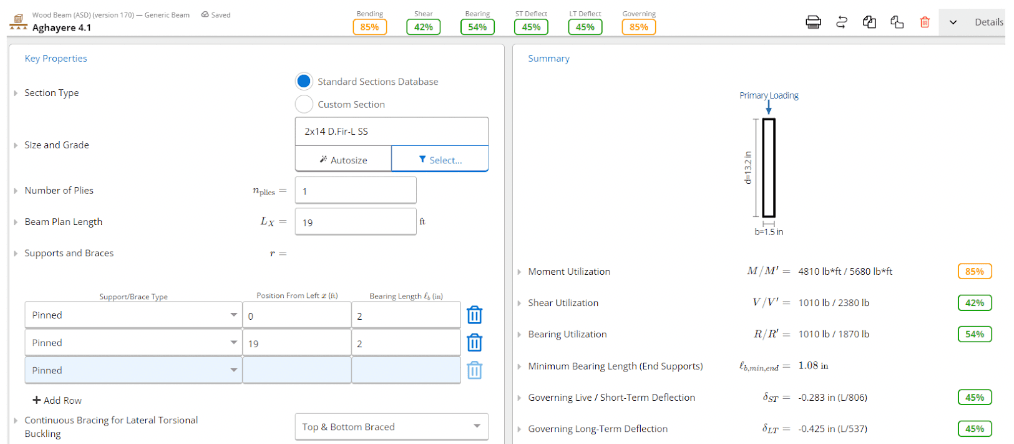
Reference: Aghayere Ex 4.1Inputs
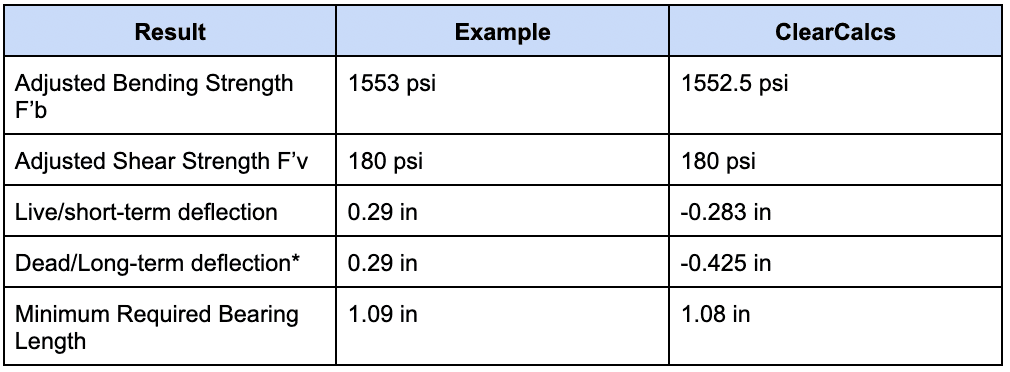
Outputs
*The difference in long term deflection is due to the total load combination for the governing long term deflection. The example considers only the dead load, while Calcs.com includes the D+L load combination to consider creep effects. By viewing the load combination D on the graphs, the value of 0.29 inches can be observed.
ASD and LRFD validation examples
US Wood Beam - Validation Examples (ASD & LRFD)
Introduction
In the following examples, we’ll go through the design of a wood beam (ASD/LRFD) to NDS 2018. The following examples outline the results for moment, shear and deflection design in Calcs.com compared to textbook results. These examples come from an extensive list of different sources used to verify the accuracy of our calculators. Want to dive deeper into these examples? Visit McGraw-Hill AccessEngineering to access these worked examples, and more, in the textbooks!Example 1
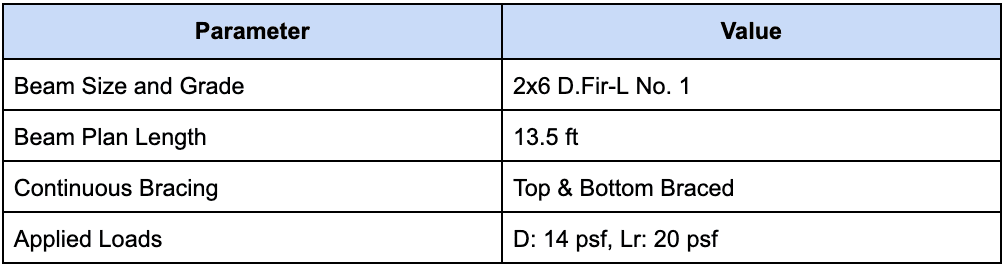
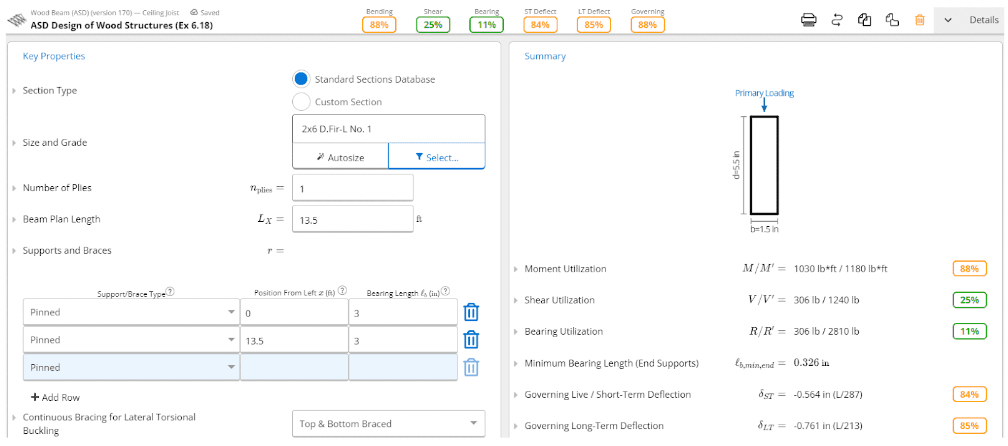
Reference: Donald E. Breyer, P.E., Design of Wood Structures ASD/LRFD McGraw-Hill. Example 6-18 (ASD).Inputs
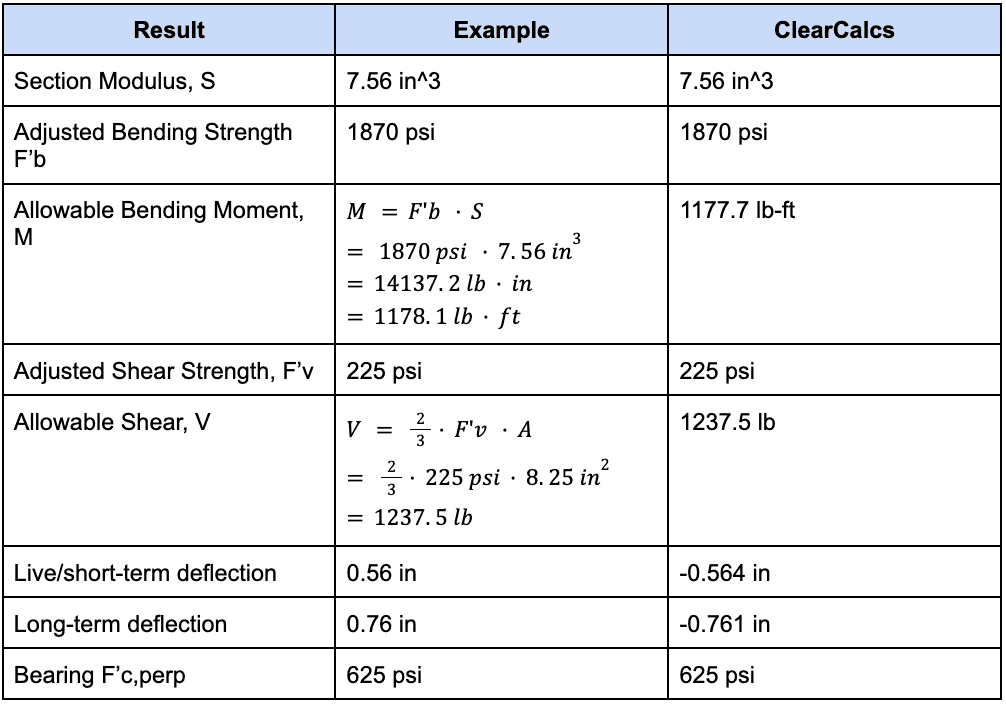
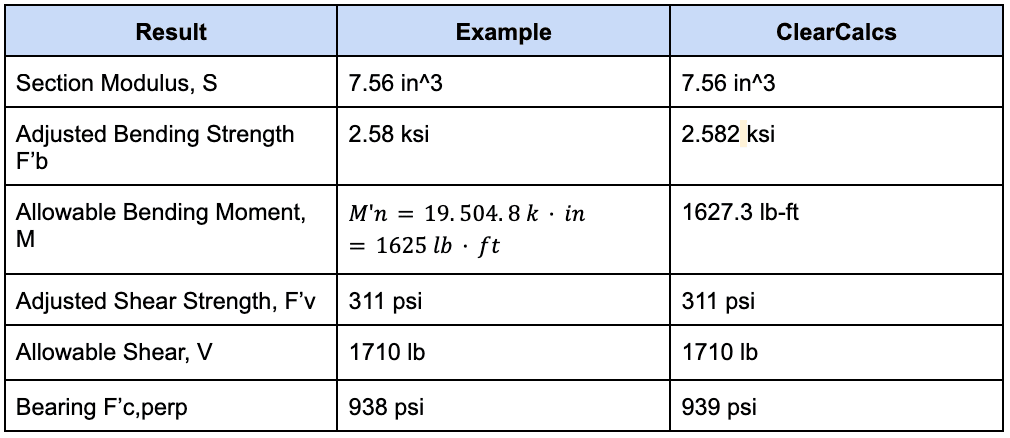
Outputs - ASD (Example 6-18)
Example 2
Reference: Donald E. Breyer, P.E., Design of Wood Structures ASD/LRFD McGraw-Hill. Example 6-18 (LRFD).Inputs

Outputs

Example 3
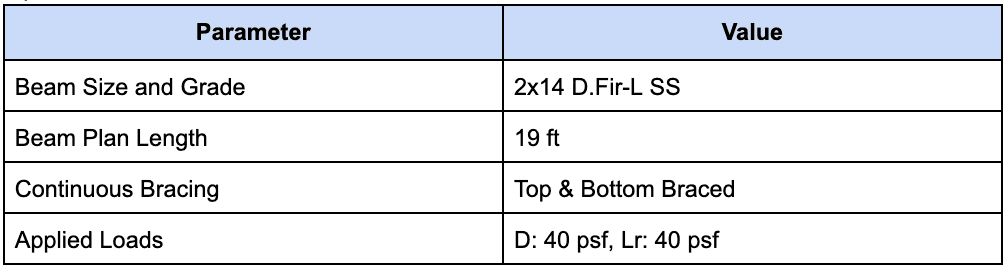
Reference: Aghayere Ex 4.1Inputs
Outputs